Your authentic leadership brand
Authentic leadership is important because it builds trust, fosters strong relationships, and drives meaningful impact. This is easier said than done however, as behaviours are often impacted by context and influenced by those around us. To step into their authentic leadership brand, leaders must first be prepared for some honest reflections about what it is they stand for, and how to bring their best self to their leadership role. In this guide, we will take you through six steps to help you get clarity on how to do this.
But first, why is authenticity so important in leadership?
Leaders who are honest, transparent, and consistent in their actions earn credibility and inspire confidence in their teams. By aligning their words with their behaviours, they create an environment where employees feel valued, engaged, and motivated to perform at their best. Additionally, authenticity enhances decision-making, allowing leaders to stay true to their values and make ethical choices even in challenging situations.
Beyond individual impact, authentic leadership shapes organisational culture and long-term success. Leaders who model integrity, accountability, and respect contribute to a workplace where these values become the norm. This approach encourages personal growth, as individuals feel safe to embrace their strengths and weaknesses. Ultimately, authentic leadership isn’t just about achieving results—it’s about inspiring others, fostering resilience, and building a legacy of trust and purpose that drives lasting success.
“You can’t build trust if the people you lead don’t know who you are, what you stand for, and why you do what you do.”
Simon Sinek
So how do you go about creating your authentic leadership brand?
When we talk about brand, we’re asking you to think honestly about what it is you represent and stand for. This may not fully reflect what people think you stand for right now, as perhaps you’ve been moulding yourself to reflect others’ expectations rather than your true essence. When it comes to your leadership brand, there is always room for improvement.
In this guide, we will take you through the below six steps, which will enable you to lead as your best and truest self.
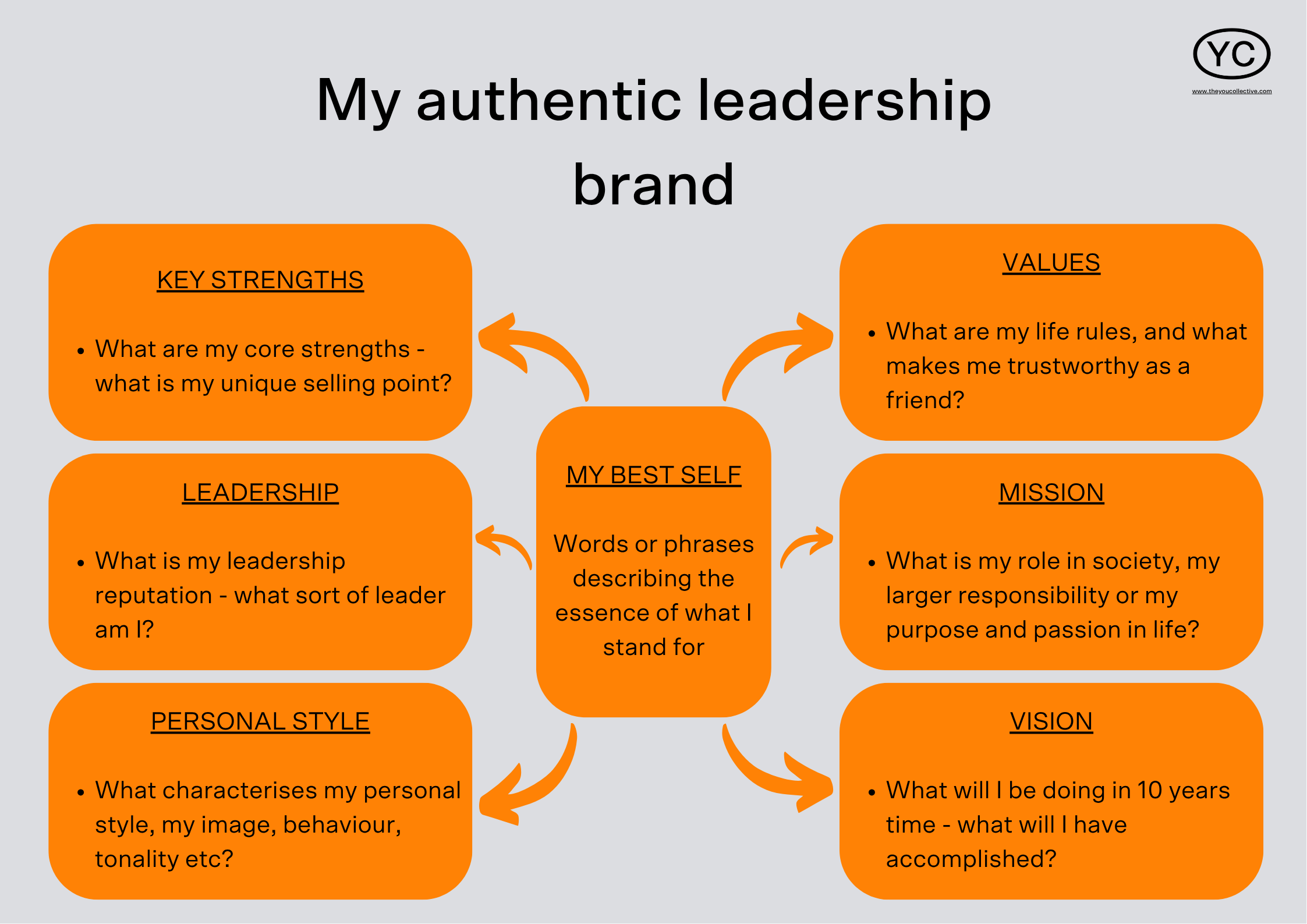
1. Key strengths
A strengths based leader recognises that they have leadership strengths – unique qualities that energise them and that they are skilled at using. They also recognise that they have areas of non-strength which drain them, and that if they try to be something they’re not they will in the long run be ineffective and unauthentic as a leader.
Reflection prompts for identifying leadership strengths:
- Take a moment to focus inwards. Visualise yourself interacting with your partner, friends, or colleagues. What would they say are your key strengths? Think about the qualities they would mention immediately – the things that make you stand out.
- Next, reflect on the times when you felt most energised, inspired, and truly yourself. What were you doing? What strengths were you using? These are often your unique selling points and why people choose to follow you.
2. Leadership
Consider your identity as a leader. How do your strengths manifest in your leadership style? What type of leader are you now, and what type of leader do you aspire to be? Imagine how others experience your leadership – your CEO, direct reports, and colleagues.
Reflection prompts:
- What is my leadership reputation?
- If I weren’t in the room, what would people say about my leadership?
- How does that make you feel? Is there anything you’d like to change?
3. Personal style
Use your imagination to observe yourself as though you’re an outsider watching as you walk into the room.
How do you look? How do you carry yourself? Imagine shaking hands with yourself – how does it feel? Consider your overall presentation and the impression you’re giving.
Reflection prompts:
- What characterises my style and approach?
- What words or phrases describe how I present myself
- What is the impact on others?
“No two leaders share the same strengths and weaknesses and attempting to mimic the strengths of another leader can’t be sustained over the long term.”
Rath and Conchie, 2009
4. Values
Think about what matters most to you in different areas of your life. What are the things you are unwilling to sacrifice? Your values provide a sense of purpose, clarity and direction. Reflect on moments when you felt triggered by someone not sharing your values – this can help you identify them.
Reflection prompts:
- What are your life rules or guiding principles?
- What values feel most important to you?
- How do these show up in your leadership?
5. Mission
Imagine yourself onstage receiving a lifetime achievement award – a celebration of what you have stood for and achieved in your life.
You feel great satisfaction because you’re being given the award for the very thing that you feel good about having contributed to, the thing that you feel responsible for and passionate about. What is that thing? Don’t be afraid to scale up whatever purpose, interest or passion you have to a higher level, and put it into a bigger and more important context for society.
Reflection prompts:
- What achievements are you most proud of and why?
- What obstacles have you overcome to achieve this?
- How does this translate into your leadership mission?
6. Vision
Imagine taking a trip into the future.
Having reflected on your achievements, now imagine the next year and beyond. What possibilities lie ahead? What will you be doing? What new achievements will you accomplish?
Reflection prompts:
- What vision inspires you for the future?
- What do you want to be known for?
- How does this make you feel?
“A value is a way of being or believing that we hold most important. Living into our values means that we do more than profess our values, we practice them. We walk our talk – we are clear about what we believe and hold important, and we take care that our intentions, words, thoughts, and behaviours align with those beliefs.”
Brené Brown
Final thoughts
Look back at the insights you’ve gathered from the six steps above. These reflections will help you articulate your best self. This doesn’t need to be a polished statement or motto. Instead, focus on capturing the essence of who you are and what you stand for. It should resonate deeply with you and inspire you during challenging times. Think creatively and let your best-self represent the substance of you and your leadership brand.
Reflection prompts:
- Words or phrases that describe the essence of what I stand for are…
- My best self statement is…

